
The Calm After the Storm - Harvest 2026
11 tonnes of grapes, eight harvest days and 174 helping hands. Another harvest is behind us, and the vineyard is finally quiet.
Harvest 2026 has now been and gone, and the weeks that follow always remind me of a rather unusual family holiday.
Back in 2016, James, Dad and I were in the Bahamas when Hurricane Matthew struck. A category 4 hurricane, Matthew caused widespread devastation across the Caribbean, and we found ourselves shuttered inside our accommodation, passing the time playing card games by battery-operated torchlight as the storm raged outside.
When it finally passed, we emerged into a very different world. Trees lay broken, traffic lights had been torn down and there was barely a soul in sight. After all the noise, wind and chaos, the silence was extraordinary.
Now, I'm not suggesting that harvesting grapes in North Yorkshire is quite the same as enduring a category 4 hurricane but there's something about the aftermath that always brings me back to that moment.
Harvest is a whirlwind of its own.
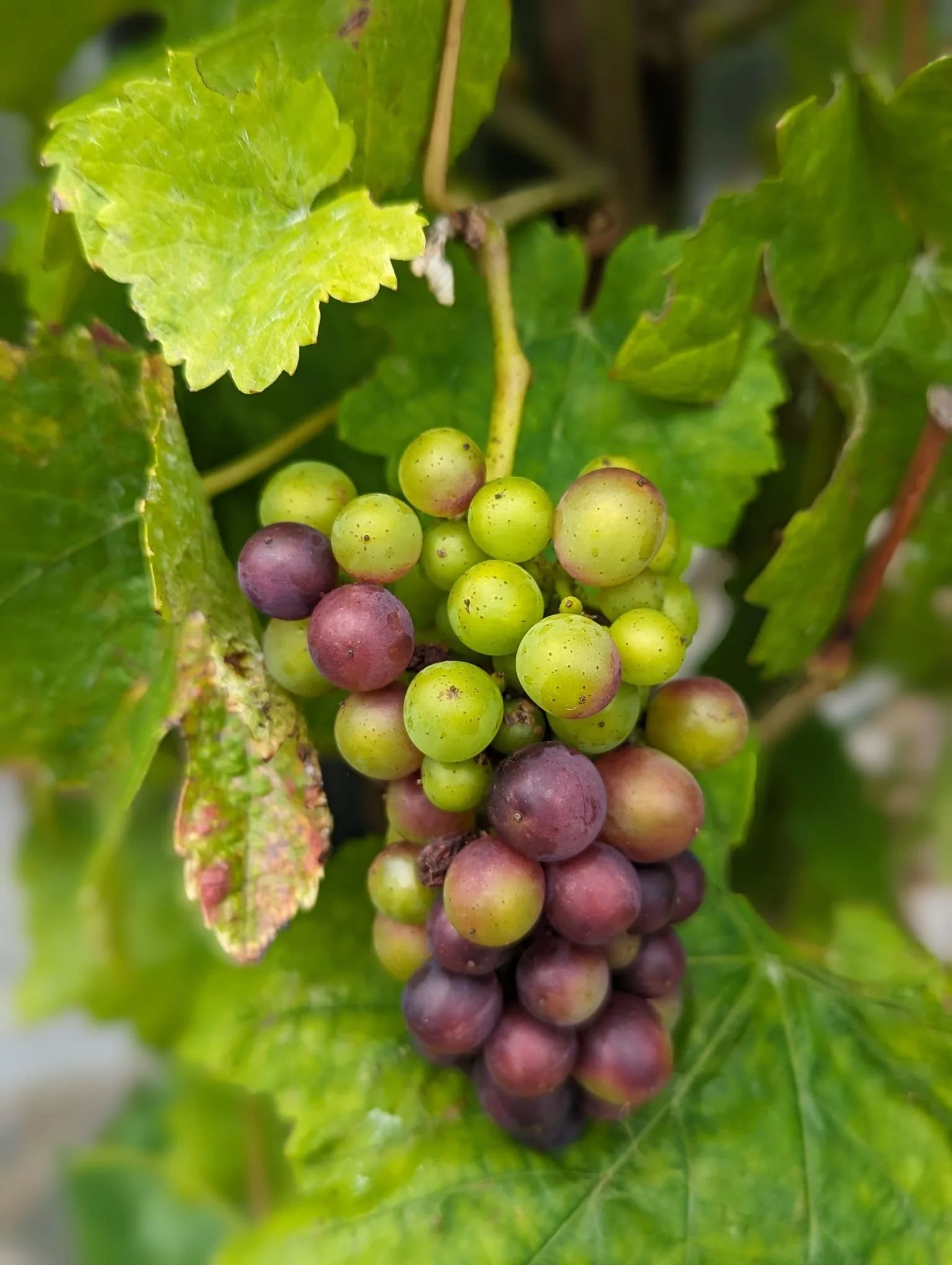
Veraison, the onset of grape ripening and colour transformation
For those of us working in the vineyard, harvest begins long before the first bunch of grapes is picked.
There's the seemingly endless race to get everything ready. The vines continue their inexorable march towards ripeness, the weather does whatever it pleases, and we're left trying to make sure that everything comes together at just the right moment.
We begin testing the grapes for sugars and acidity, initially week by week, then day by day as harvest approaches. We spend hours discussing what the numbers tell us about the potential characteristics of the wines, how the grapes actually taste out in the field, and whether disease or the weather might force our hand.
At the same time, we're forecasting yields, estimating picking dates, arranging collections with the winery and organising the wagons that will take our grapes away. All of this is done with the knowledge that a few days of unexpected weather can render even the most carefully considered plan completely useless.
It's an exhilerating time of year, but also an exhausting one. There are dozens of decisions to make with incomplete information and every one has the potential to influence the wines we'll eventually produce.
Then, just as we think we've got everything under control, the first harvest day arrives and the storm truly begins.
Early mornings, harvest briefings, calls to the winery, paperwork, spreadsheets, logistics, delays and the occasional unwelcome weather forecast. There's an enormous amount happening behind the scenes to make sure the grapes get from vine to winery in the best possible condition.
And, of course, there are the people. Lots and lots of people.
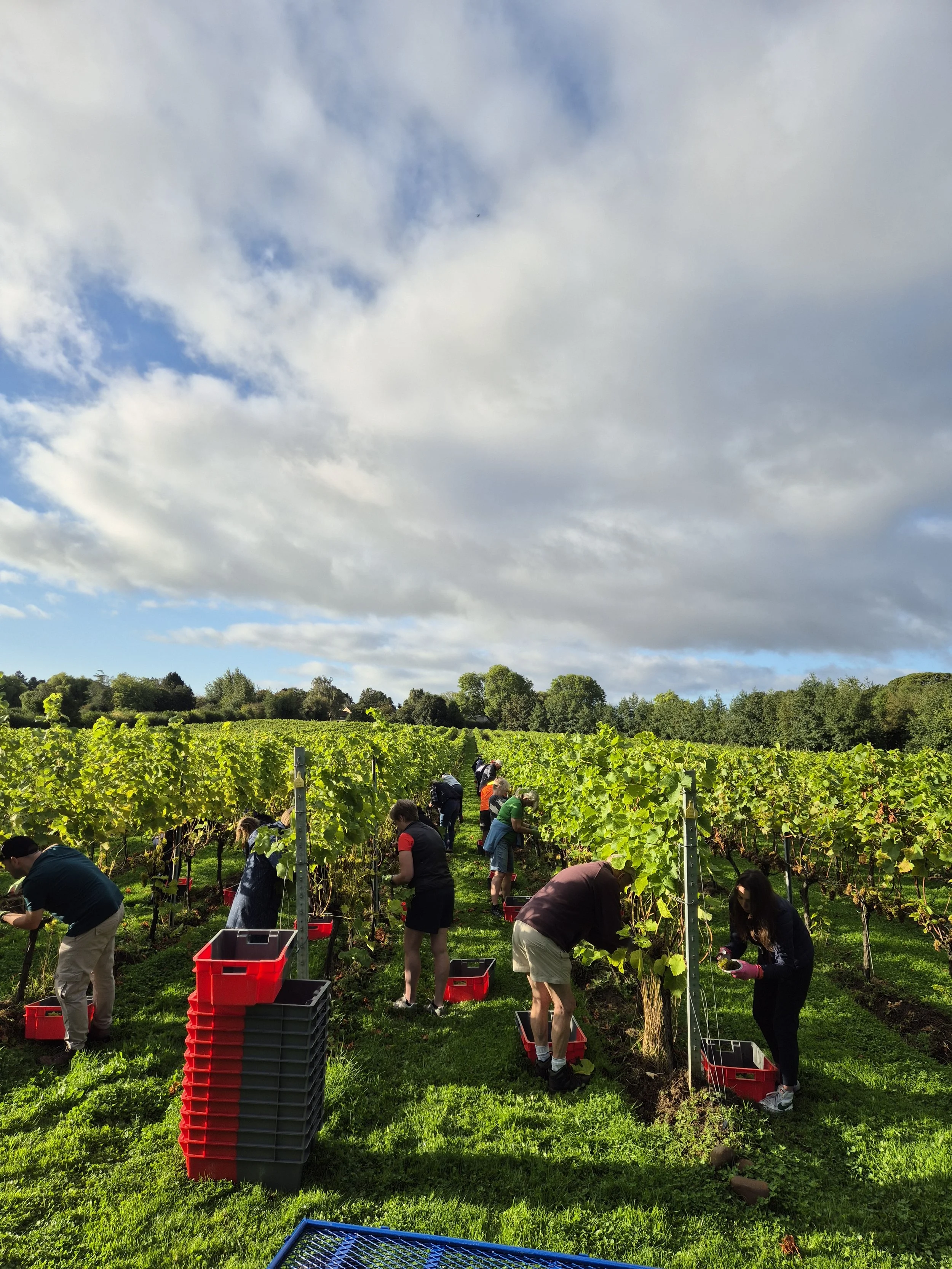
15th September, picking grapes for our Still Solaris 2026
This year, we harvested four grape varieties across eight picking days, with an extraordinary 174 people helping us bring in the fruit.
Our first grapes came off the vines on 7th September, when we began picking Solaris, the earliest we've ever picked here at Dunesforde, and the final bunches were harvested on 15th October, bringing a little over five weeks of picking activity to a close.
Across those weeks, we brought in:
5.2 tonnes of Solaris, picked between 7 and 15 September.
2.1 tonnes of Pinot Noir Précoce, picked between 22 September and 8 October.
1.4 tonnes of Pinot Gris, picked between 29 September and 15 October.
2.3 tonnes of Bacchus, picked between 13 and 15 October.
All told, that's 11 tonnes of grapes, representing a yield of 6.9 tonnes per hectare.
It's a smaller harvest than we've enjoyed in previous years, although that's perhaps unsurprising given the frost damage we suffered back in the spring. Nevertheless, we're particularly pleased with the quality of the fruit. The weather was generally kind to us throughout the remainder of the growing season and the careful work undertaken in the vineyard was vital in ensuring that quality was there come harvest time.
In particular, some of the changes we've made to the way we manage the vines have helped us keep disease pressure to a minimum, allowing us to bring in wonderfully healthy, ripe fruit.
There's still a long road between grapes arriving at the winery and finished wine making its way into a bottle. Not to mention the fact that you simply do not know quite how a particular wine will shape up until you're tasting the finished bottle! But the quality of the fruit gives us plenty of reasons to be optimistic about the 2026 vintage.
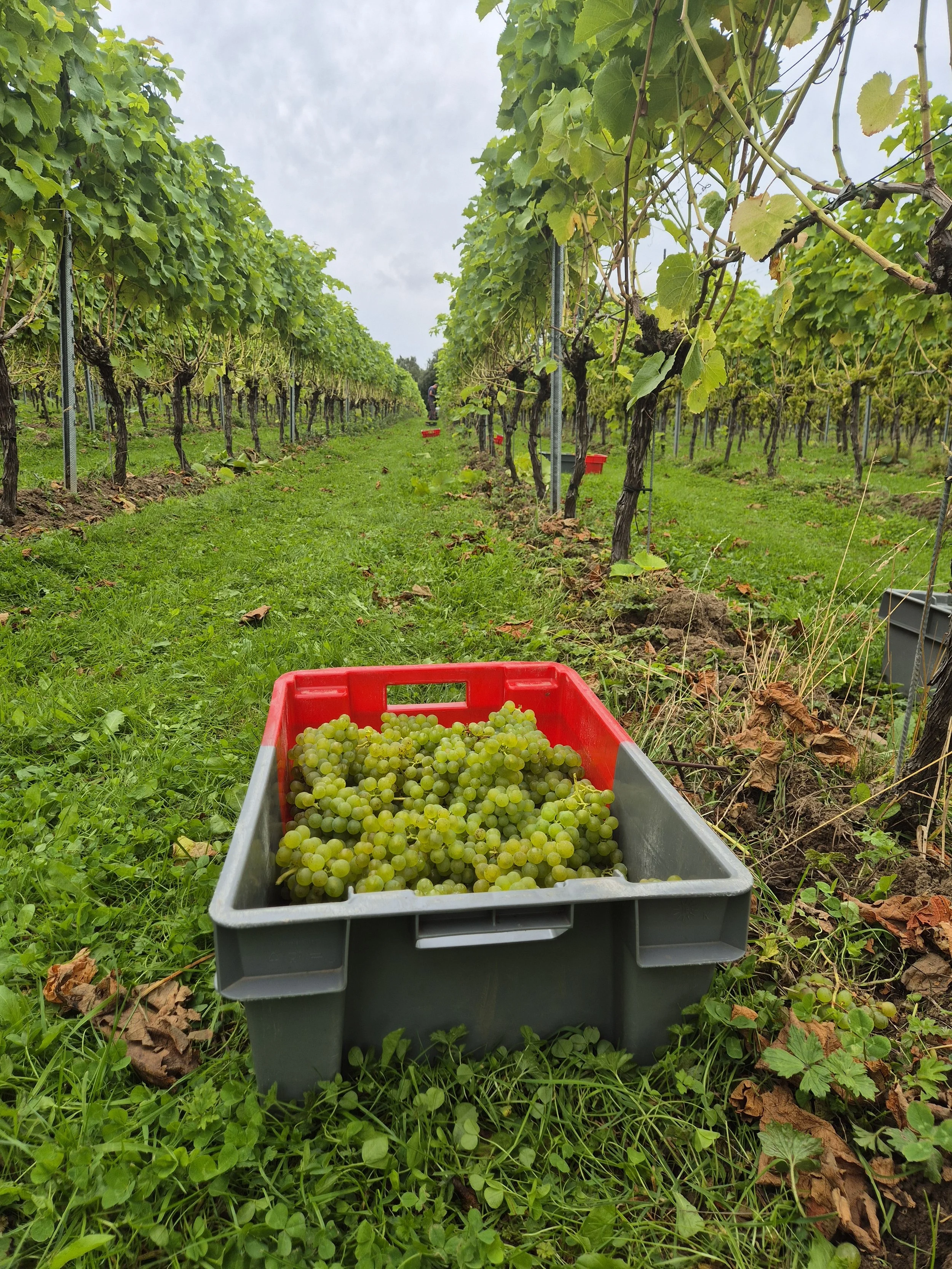
Grapes, ready to be collected
It's impossible to reflect on harvest without acknowledging the extraordinary contribution of our volunteers.
Across eight harvest days, we had 174 people helping us pick, sort and carry grapes, often starting early in the morning and working through whatever conditions North Yorkshire decided to throw at us.
Some are familiar faces who have been coming to Dunesforde for years, while others were joining us for the very first time. All of them played an important role in bringing this year's harvest home.
Harvest is hard work, and there's no getting away from that, but it's also one of the most enjoyable times of year at Dunesforde. There's a wonderful atmosphere amongst the rows, with conversations, laughter and the occasional friendly competition over who can fill their crates the fastest.
We're enormously grateful to everyone who gave up their time to help us. We simply couldn't do it without you.
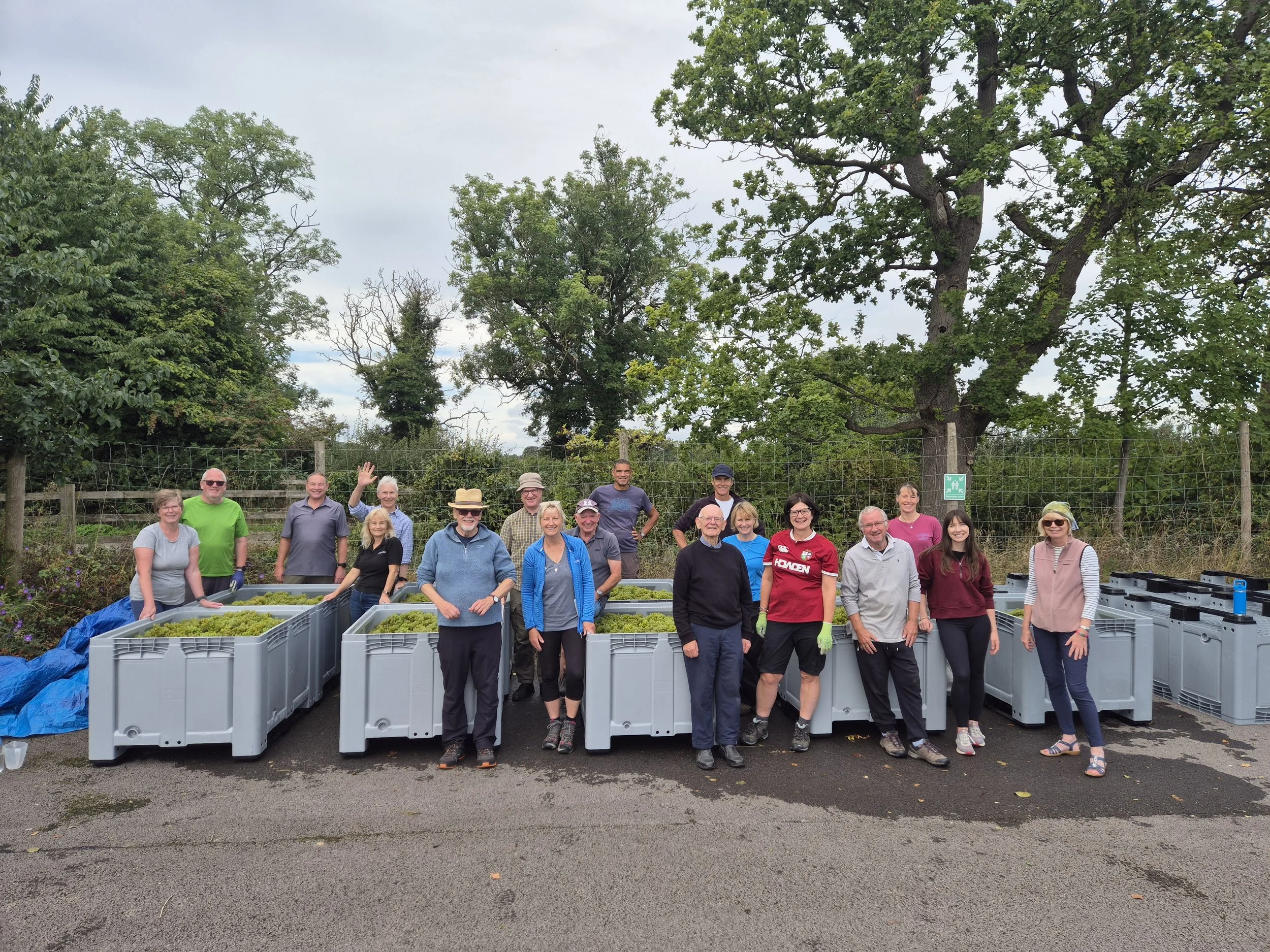
7th September harvesters, these Solaris grapes designated for our Sparkling Solaris 2026 won’t be finished wine until 2030!
This harvest also marks the beginning of an exciting new chapter for Dunesforde.
After six years away training and working as a winemaker, James has returned to the team, bringing with him a wealth of new knowledge and experience.
For a family vineyard like ours, it's a particularly exciting development. We've always taken enormous pride in the wines we produce, but having James back with us opens up some exciting possibilities for the years ahead.
There's plenty we'd like to achieve, both from a vine-growing and wne-making point of view and we're looking forward to seeing where this next chapter takes us.
For now, though, our attention turns to the quieter work of winter. The vines will soon be dormant, and before long we'll be back amongst the rows pruning, repairing and preparing for another growing season.
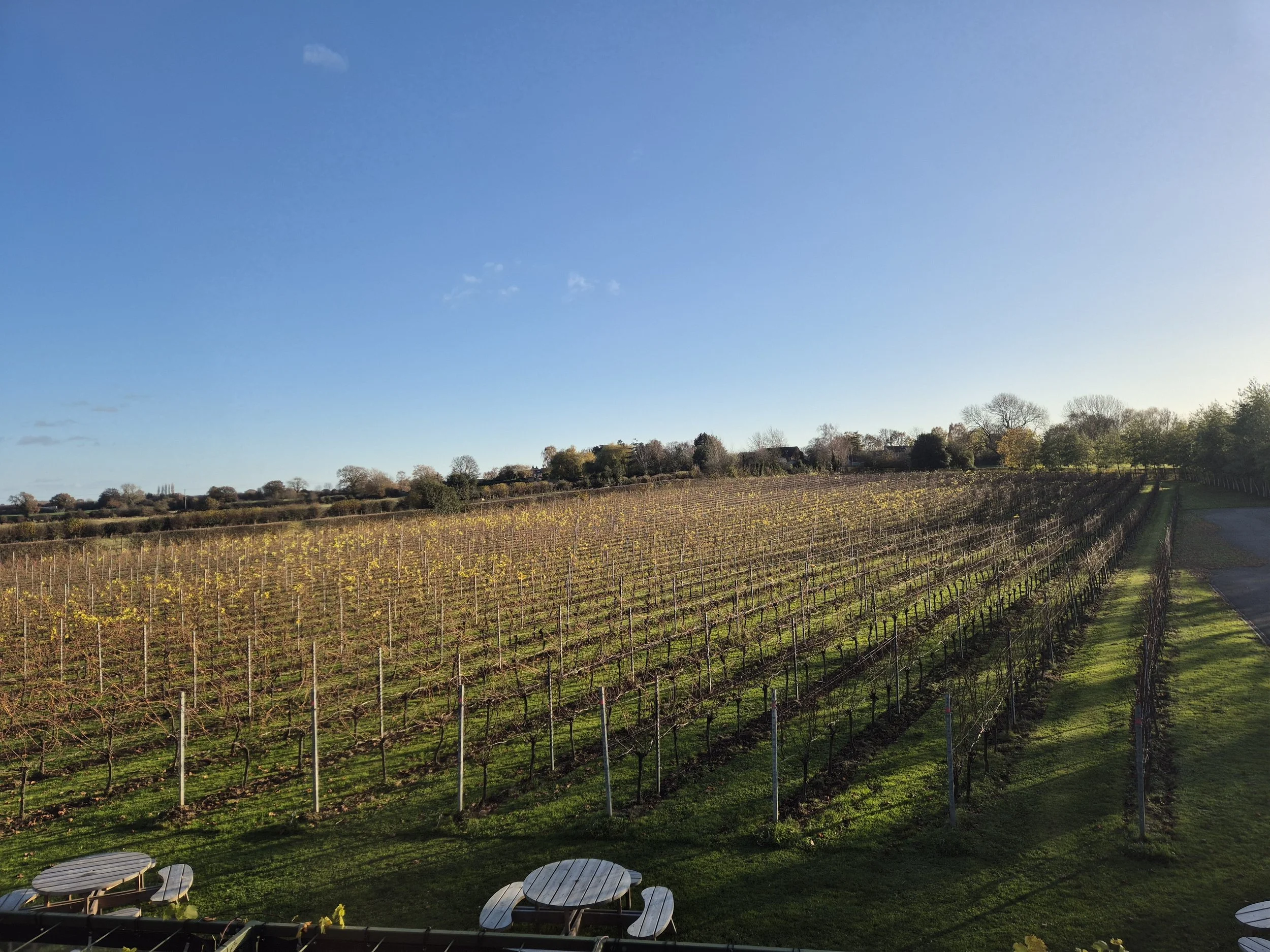
A few windy days and the vineyard is transformed
And just like that, it's over.
After weeks of planning, anticipation, early mornings and frantic activity, the vineyard is suddenly quiet.
The grapes are gone, the harvest crates have been stacked away, and the leaves are beginning to fall from the vines. Where only a few weeks ago there were dozens of people moving amongst the rows, there's now sparrows and pheasants busying themselves getting the few bunches that remain.
It's a strange feeling. There's relief and a great deal of satisfaction in knowing that another year's work has been safely gathered in. But there's also something a little melancholy about seeing the vineyard so still after all that activity.
Thankfully, unlike our experience in the Bahamas, the only devastation left behind is a few empty coffee cups and a mysterious blue fleece.
The 2026 vintage is now making the uncertain journey to becoming wine, we're looking forward to discovering what becomes of all that wonderful fruit.
For everyone who helped us along the way, thank you. Here's to Harvest 2026, and to the wines that will come from it.
Until next time,
Peter