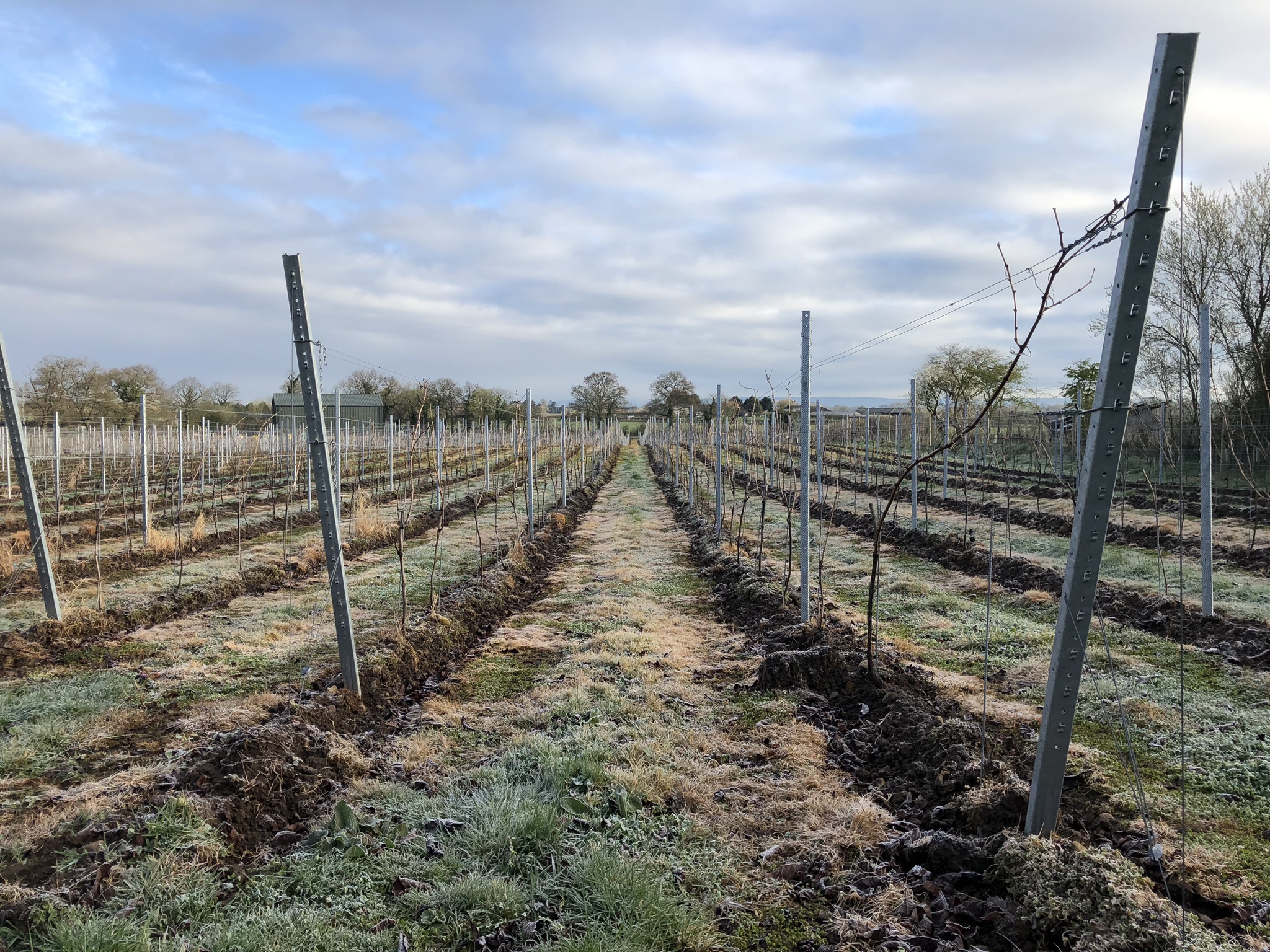
Frost at Dunesforde
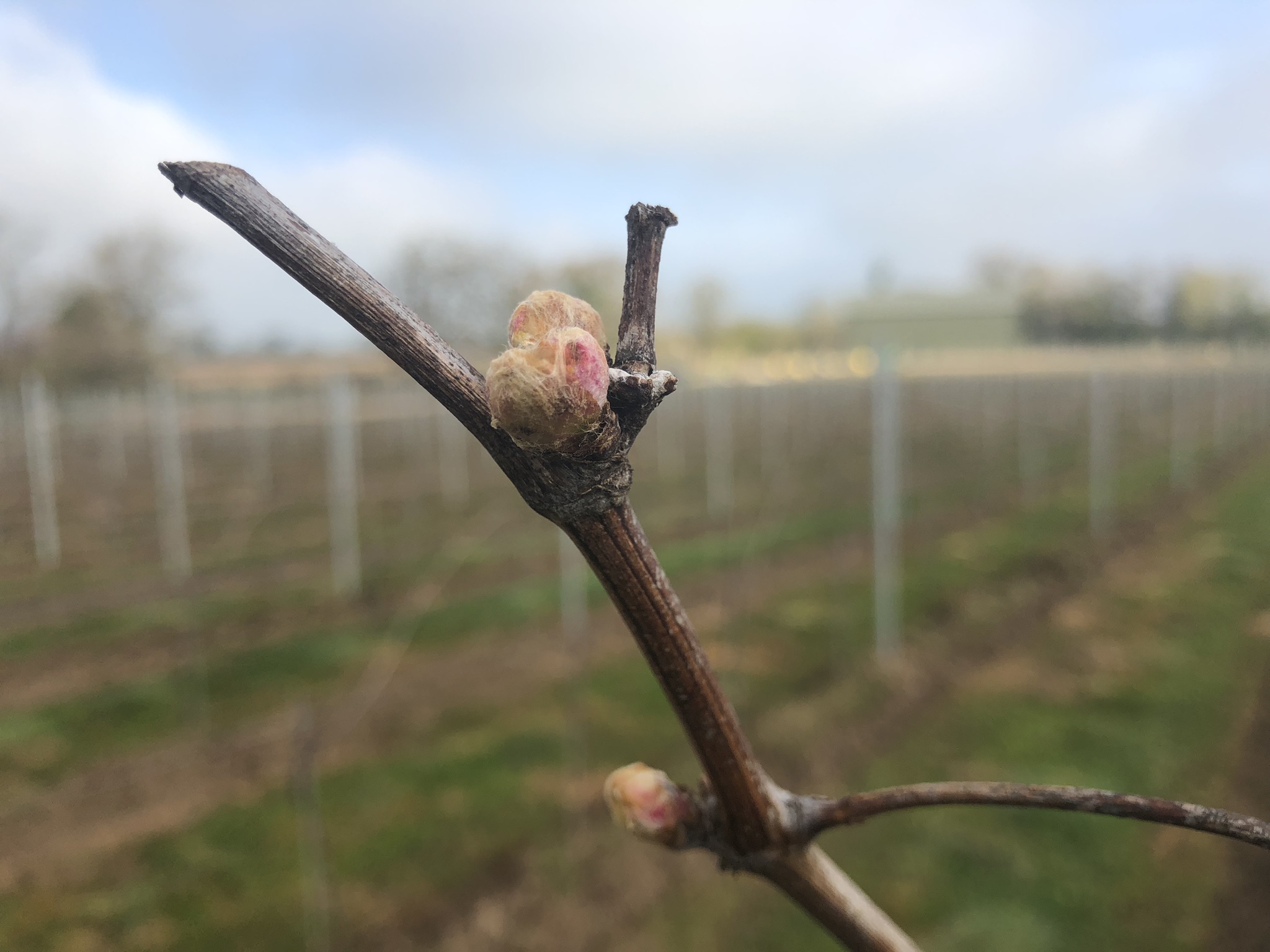
The recent unseasonal weather has meant the vines are further along than normal, with the buds already at the ‘woolly bud’ stage a couple of weeks ago. Some very warm days in February and early March has kick-started the vines out of dormancy. If temperatures had continued to rise, the buds could have burst, and we would have had new shoots on the vines. It’s these green shoots that are most susceptible to frost damage, as they have a higher water content in their tissue than the woody vines. Fortunately, the return to colder weather has put the brakes on this process and the buds have remained at the woolly stage.
Frost is a potential problem at Dunesforde, and in most of the UK, until at least the beginning of May, so we have strategies in place to help protect against frost damage.
While most vineyards in England and Wales prune in December, January and finish in February, we leave it as late as we can and don’t prune until the last weeks of March as this can help to delay bud burst slightly. Once pruned, we leave the remaining canes long and in an upright position. This can help as frost finds it harder to settle on a vertical cane compared with a horizontal one, and the first buds to grow shoots should be the ones at the top of the cane, which we can remove when we come to tying down. Frost is a problem for vineyards all over the world, with some regions having a number of ingenious solutions – from helicopters in New Zealand that circulate the cold and warmer air above it, to misting the vines with water to form ice around the shoots (which amazingly protects them from frost damage!).
With tying down just around the corner, we will be on high alert for frost events and hoping the new shoots get through April and May unharmed.